Why Trust is the New Currency in Home Remodeling
Over the last few years, a major shift has happened in how homeowners buy remodeling services. You might notice it in slower lead conversions, more hesitant prospects, or homeowners who seem to shop around much longer than they used to.
You’re not just imagining this change. The rules of contractor selection have fundamentally transformed.
Homeowners in 2026 aren’t walking away from home improvement. The market remains large, resilient, and shaped by long-term pressures that keep repair, replacement, and renovation demand active.
But homeowners are prioritizing differently.
They’re more selective, risk-aware, and focused on choosing contractors they believe they can absolutely trust.
That is the core of the 2026 trust shift: trust has moved upstream in the buying process.
A homeowner now searches your company name, reads your latest reviews, checks your photos, compares your business to competitors, and forms an opinion before your sales team ever has a chance to make the first impression.
If your reputation is invisible before the first point of contact, your team is already starting from behind.
In most cases, you’re not losing jobs to better pricing––you’re losing them to better proof.
Why This Matters Now: The Market Is Still Growing, but the Buyer Has Changed
The home improvement market is still being pushed forward by strong macro conditions. According to Research and Markets, homeowners are staying put longer, investing more in the homes they already own, and putting money into projects tied to safety, resilience, comfort, and efficiency.
Here are seven major macro drivers shaping the home services and remodeling market:
| Macro Driver | What It Means for Remodelers | Revenue Impact |
| Aging housing stock | The median U.S. home is about 44 years old + nearly half were built before 1980; Older homes need more repairs, replacements, and updates. | More recurring demand for roofing, siding, windows, HVAC, baths, kitchens, and structural upgrades. |
| Housing shortage | Many homeowners are staying in place instead of moving because replacement housing is limited or expensive. | “Improve, don’t move” keeps remodeling demand active. |
| High mortgage rates | Elevated rates make moving less attractive and increase interest in upgrading the current home instead. | More spending on renovation, maintenance, and comfort-focused improvements. |
| Rising home equity | Many homeowners built significant equity during recent housing gains. | Equity supports financing for large or phased remodeling projects. |
| Insurance requirements and risk mitigation | Insurers increasingly require roof replacement, storm protection, and resilience-focused upgrades. | More demand for projects tied to compliance, protection, and insurability. |
| Climate and weather impacts | Storms, heat, flooding, and fire risk are increasing repair and durability needs. | More urgency around replacement and performance-driven projects. |
| Demographic shifts | Baby boomers, Gen X, and millennials all approach remodeling differently, but all remain active in the category. | Demand grows across maintenance, aging-in-place, value-add, and lifestyle projects. |
These forces support demand. But demand alone doesn’t guarantee growth for every contractor. The winners are the businesses that align with how homeowners now decide.
Understanding the 2026 Trust Shift
Homeowners are more risk-conscious and proof-driven than they were even a few years ago. In the past, a strong referral could carry the sale. Today, a referral often gets you considered, not chosen.
This shift is tied directly to distrust.
Nearly 70% of homeowners worry about unreliable contractors, while 41% say they’ve been deceived by a service provider in the past, according to Leaf Home / Morning Consult.
That fear changes behavior. Homeowners do more research, compare fewer companies more carefully, and look for visible signs that a contractor is organized, credible, and safe to hire.
This creates a serious disconnect. You may know that your crews do great work, your process is solid, and your customers are happy. But if a prospect can’t see that proof quickly and clearly, that trust doesn’t fully exist in the buying moment.
The Evolution of Contractor Selection
To understand where revenue starts leaking from your pipeline, we must look at how the homeowner decision process has evolved over the last decade.
| Feature | The “Old” Way | The 2026 Way (The Trust Shift) |
| First Impression | A phone call, yard sign, or showroom visit | Online reviews, project photos, website quality, and a strong Google presence |
| The Role of Referrals | Often enough to close the sale automatically | Still valuable, but this usually only starts the process & requires online verification |
| Quote Comparison | Homeowners compared multiple (4+) quotes; they casted a wide net | 42% of homeowners compare just two quotes; they narrow the list early |
| Price Evaluation | The lowest or “cheapest” bid carried more weight + often won the job | Price is judged alongside trust, clarity, and risk |
| Sales Process Start | When the lead enters the CRM | Before the lead ever reaches out |
This isn’t just theoretical.
According to BrightLocal’s Local Consumer Review Survey, 97% of consumers read reviews for local businesses before making a purchasing decision.
Similarly, ACHR News reports that:
- 87% of consumers use Google to research local businesses
- Search engines remain a leading way homeowners find contractors
In other words, your online reputation is no longer just a brand asset. It’s also a pricing asset, a conversion asset, and a close-rate asset.
Homeowners see remodeling as high-risk because the cost is meaningful; the work happens in their home, and quality is hard to judge before it starts.
That fear drives behavior: more research earlier, fewer contractors considered, and a heavy reliance on visible proof before they ever pick up the phone.
That’s why visible trust signals matter so much––homeowners are trying to avoid costly, distressing mistakes, and ask questions like:
- “Will this job be done right the first time?”
- “If they’re hard to reach now, what happens after I sign?”
- “Do other people like me/with projects similar to mine trust this company?”
- “Is this business established, legitimate, and accountable?”
- “How do I know which company is the safe(st) bet?”
Contractors often think trust is built primarily in the home during the appointment. It still matters there, of course.
But in 2026, a large share of trust is either built or lost before the appointment is ever set.
Referrals Get You Considered, But Proof Gets You Chosen
Word-of-mouth referrals remain highly trusted, with over 60% of homeowners saying they value recommendations from friends and family.
But in today’s remodeling landscape, a fundamental behavior change has occurred: referrals now require verification.
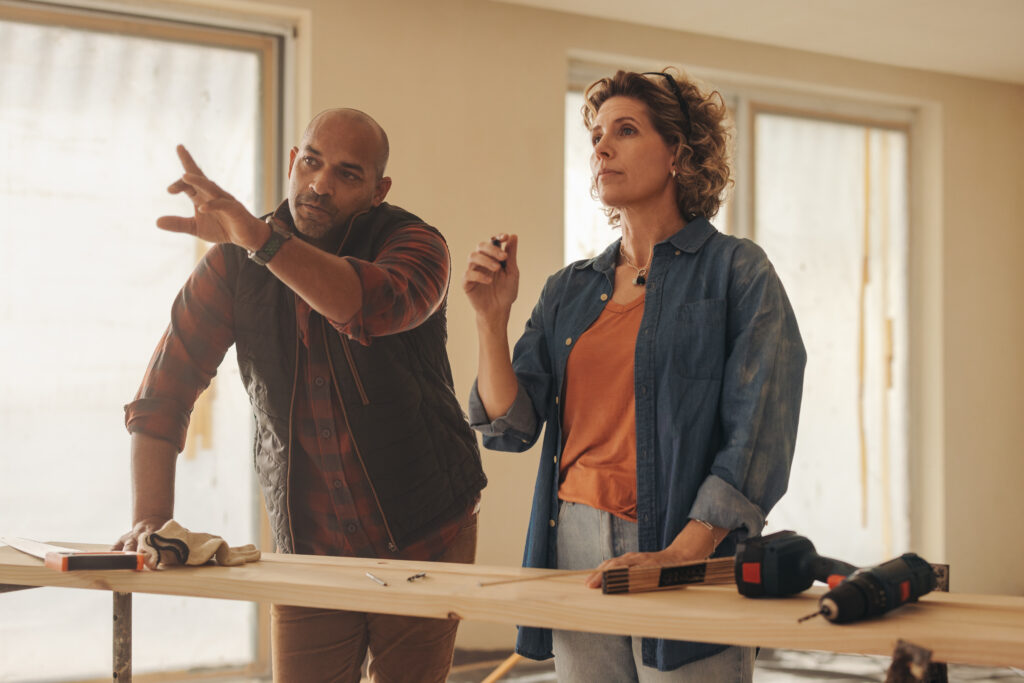
Imagine this: One of your past customers recommends your remodeling or roofing business to a coworker.
Ten years ago, that coworker called you directly. Today, that coworker:
- Types your company name into a search engine
- Looks at your overall review rating
- Reads your three most recent reviews
- Examines photos of completed jobs that match their own needs
- Checks for licensing, insurance, and professional affiliations
If they can’t find this information, or if they find a competitor with a much stronger public profile, the referral loses all its power.
You need systems that turn every successful job into visible credibility. When you capture customer feedback and publicize it, you turn an invisible job well done into a permanent, visible asset that works for you 24/7.
Trust Signals and Their Purpose
If trust truly begins before the first call, remodelers need to know what homeowners are looking for and why those signals matter.
- Recent reviews and ratings: Show consistent customer satisfaction, reducing perceived risk and providing social proof.
- Review responses: Demonstrate accountability and professionalism, showing that the business is active and engaged.
- Project photos: Highlight real results and relevant experience, helping buyers picture your work on their own home.
- Licensing, insurance, and certifications: Establish legitimacy and qualifications, reassuring buyers that the company is credible.
- Clear contact details and business information: Convey stability and transparency, making the company feel real and reachable.
- Fast follow-up: Reflect organization and reliability, signaling what the customer experience will be like.
- Detailed proposals and next steps: Indicate clarity and professionalism, reducing uncertainty around cost and process.
- Public reputation across platforms: Show consistency, confirming that trust holds up beyond one channel.
This is where many remodelers unintentionally lose ground.
They may have strong crews, solid operations, and happy customers, but they don’t have a repeatable process for turning good work into visible proof.
That’s the exact gap GuildQuality can help close.
As part of the same family of solutions as improveit 360, GuildQuality specializes in helping remodelers collect structured customer feedback, identify issues early, and turn strong customer experiences into visible proof that builds trust and drives future business.
The Hidden Revenue Leakage
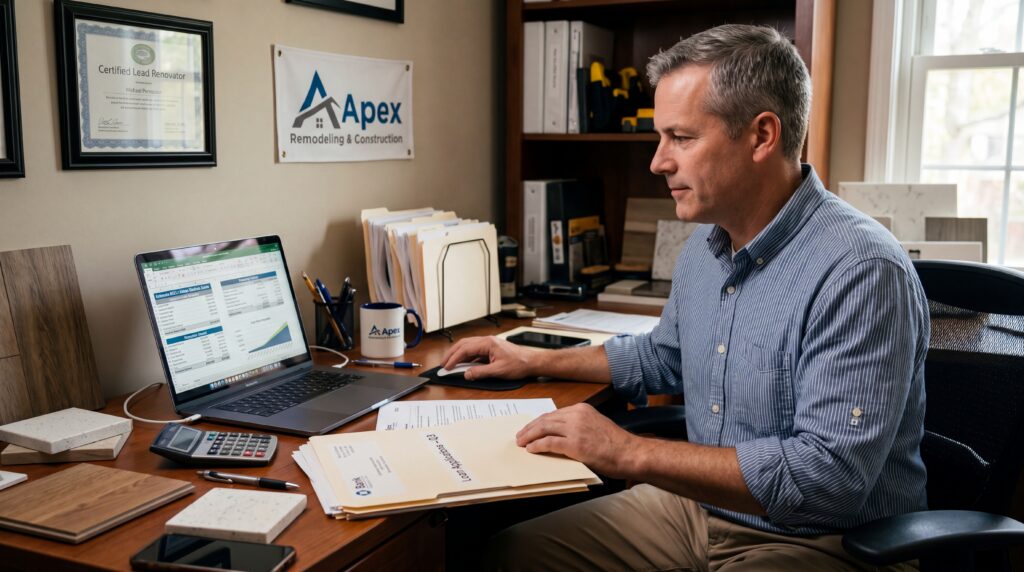
The trust gap isn’t just a marketing or branding issue. It’s a direct sales issue that impacts your bottom line in three distinct ways.
1. The Pre-Contact Drop-Off
When homeowners research you and find a lack of recent reviews or inconsistent business information, they quietly move on to the next option.
This is a major source of invisible revenue leakage because it happens outside the CRM.
2. The Pricing Squeeze
Strong reputation gives you room to defend price. Weak proof pushes you toward discounting.
Data shows that 72% of homeowners say they would pay up to 10% more for a contractor with a stronger, proven service reputation.
If you lack visible proof, homeowners view your business as a higher risk. To offset that risk, they expect a lower price.
An invisible reputation forces you to compete on price rather than value.
3. The Follow-Up Failure
Communication quality is now a primary factor in contractor selection. Homeowners expect a professional buying experience with speed and convenience.
If your follow-up is slow or disorganized, uncertainty grows. They assume that if you’re frazzled during the sales process, you’ll be just as chaotic during the installation.
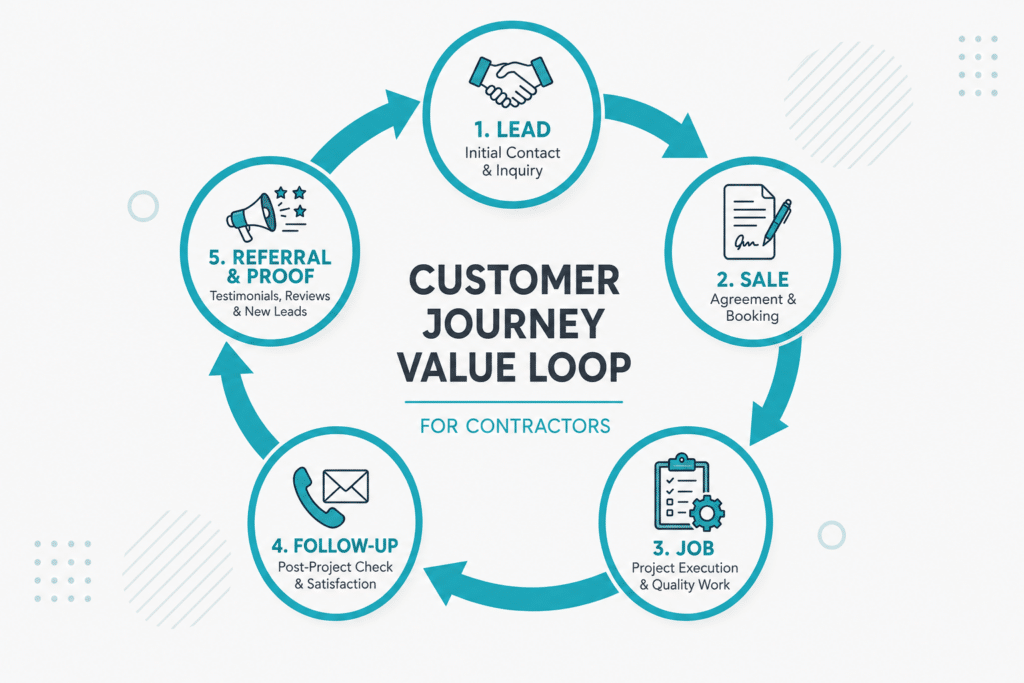
The Customer Journey Value Loop
To fix this revenue leakage, you must connect your sales process with your reputation management. This creates a continuous cycle where one job feeds the next.
Lead → Sale → Job → Follow-Up → Referral & Proof
- Lead & Sale: A homeowner finds your highly-rated business and requests a quote. Your team follows up instantly using structured workflows.
- Job: You deliver an excellent installation and a smooth customer experience.
- Follow-Up: You automatically request feedback upon completion.
- Referral & Proof: That feedback becomes a published review, which acts as visible proof to capture the next lead.
When you break this loop—by failing to follow up or failing to collect reviews—you lose the value that should have carried into your next sale.
Your Action Plan for 2026—and Beyond
To thrive in this new landscape, you must adapt to how homeowners buy. Take these immediate steps to secure your revenue:
- Audit Your Early Funnel: Search your company name online. Look at your reviews, photos, and business details. Does your digital presence reflect the quality of your actual work?
- Treat Communication as Part of the Sale: Use your CRM to automate fast responses. Speed and clarity build early trust.
- Show Proof Early: Don’t wait until the final presentation to show your credentials. Feature your reviews, licensing, and past projects front and center.
- Automate Your Reputation: Connect your CRM to a feedback engine. Make review collection a mandatory, automated step at the end of every project.
Tailoring the Solution to Your Business
Closing the 2026 trust gap requires the right systems. You cannot manually manage every lead, schedule every follow-up, and track down every customer for a review.
You need technology that scales with your growth.
Close the Trust Gap with improveit 360 and GuildQuality
improveit 360 helps you run your business. It keeps your leads organized, your communication fast, and your production on track. But operational software alone doesn’t show the homeowner how great you are.
That’s where GuildQuality comes in.
GuildQuality helps you grow your business through trust.
By integrating GuildQuality with improveit 360, you create a seamless, connected workflow. When a job is marked complete in your CRM, GuildQuality:
- Reaches out to the homeowner
- Collects feedback, and
- Turns that feedback into visible public proof
This integration eliminates the manual work of chasing reviews and bridges the gap between the great work you do on the job site, and the visible proof homeowners demand online.
See how improveit 360 and GuildQuality work together to turn customer experience into a measurable growth lever.